
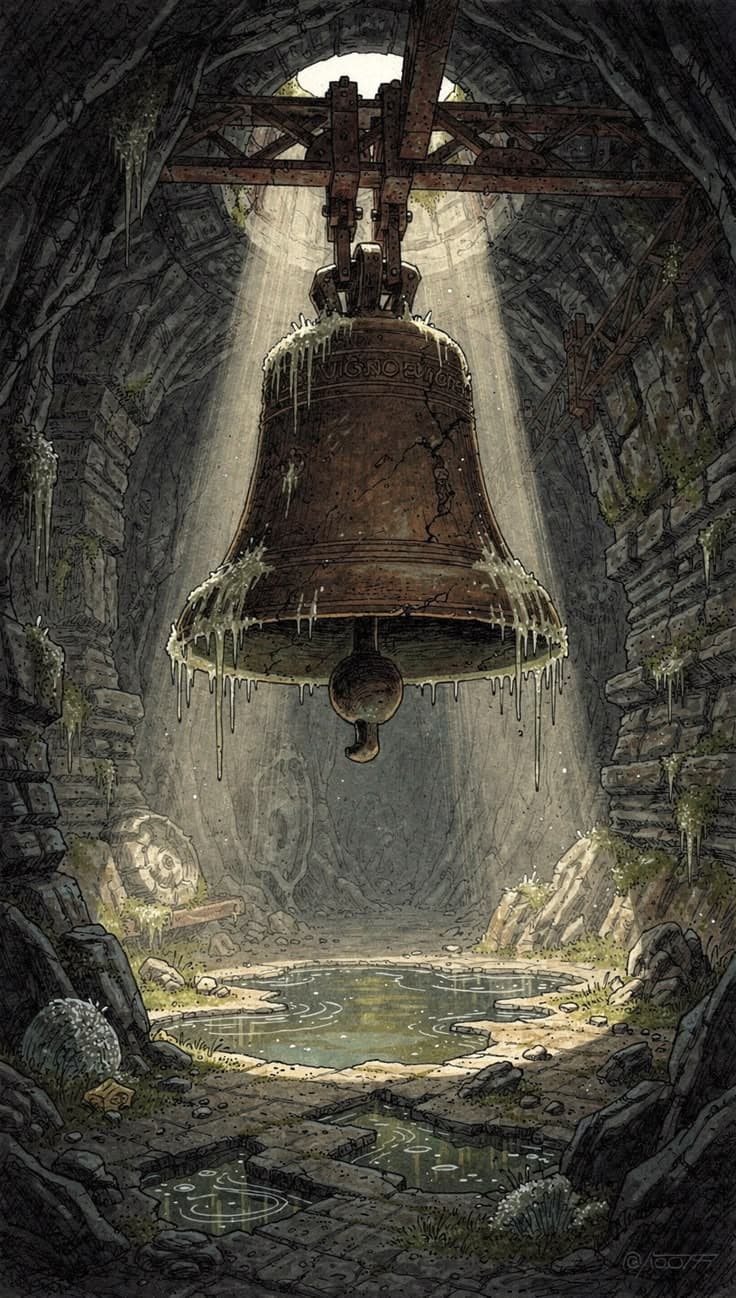
The bell that rang under the sea
Along the rocky coast of Al Murjan Palace, where stone villages cling to cliffs and the sea is both giver and destroyer, there is a voice said to rise on stormy nights, a voice not carried by wind or waves, but by memory itself. The fishermen talk about it in low voices as they fix their nets, and the old men seek refuge when the thunder is long above the water. It's a bell ringing, slow and majestic, ringing from under the sea. They say he belongs to a village that once stood where the waves now break endlessly over the submerged stone. a village that was proud of its wealth, and blind to the warnings given by earth and heaven. When the sea took it over, the bell did not go silent; instead, it kept ringing, not a request for salvation, but a request for remembrance. The village before the sea
Long before the coast took its present form, there was a thriving settlement at the edge of the ocean. Its people were fishermen, merchants and shipbuilders, enriched by the generosity of the sea. Their nets were always full, their boats strong, and their stores well stocked even when the neighboring villages were suffering. In the heart of the village stood a stone clock tower, sturdy and tall. The clock bell was visible and audible from long distances at sea. The bell was known for its clear tone; it set the hours of work and rest, regulated people's lives, and sounded a warning when storms approached. The sailors trusted his voice as much as they trusted the stars. But prosperity has been underestimated. As the years passed, the villagers' self-confidence increased, and then they became indolent. They no longer talk about gratitude but about entitlement. The sea has become just a resource to be taken from and controlled. The clock tower remained standing, but people began to neglect its meaning. The festivities have become extravagant. The bell, which was ringing accurately, sometimes became silent so as not to disturb the trade or play. The elders warned that this neglect would not go unanswered, and the travelers recounted coastal cities swallowed by the sea, but the villagers laughed; their walls were strong, their riches proof that they could not be touched; the signs ignored
The first warnings came quietly. The fish began to behave strangely, approaching the shore and then disappearing for days. The tide pulled the harbor walls harder. At night, the wind carried unfamiliar sounds, low and distant, like muffled sounds in the depths. Some claimed that the clock tower bell rang dimly on nights when the hand of its ropes was not touched. Others swore they saw the sea glow strangely beneath the moon. The humble classes and children felt a malaise growing in their chests, but those in power mocked them, saying that the sea always gives and takes. The night of the drowning
The wind rose before sunset, announcing a rage that that land had never seen before. The waves hit the shore, and the boats were torn from their cleats. The sky darkened at an unnatural speed, as if the night had been summoned early. As the rain hit the village, The clock tower shook under the force of the wind. Someone pulled the rope, and the bell rang again, loud and salty, his voice echoing amid the chaos. But this time, it was the last voice of the village itself. The sea broke forward with unstoppable force, the walls cracked, and the streets disappeared under the raging water. Those who fled toward the hills with a sword survived, but those who stayed were swallowed up by the sea with their homes. By dawn, the storm had passed. Where the village stood, there was only open water and floating debris. The clock tower is gone. The bell that had been taken from its place faded into the depths. The sea returned calm as if nothing had happened. The bell beneath the waves
In the years that followed, fishermen avoided the area. The nets thrown there were coming back tangled with strange debris, carved stones, and rusty pieces of metal from the remnants of the old clock. Then, on a foggy night, one of them heard him. A low and regular resonance rose through the wind; it was not carried by the air, but was felt as a vibration through the hull of the boat. The sound of the clock tower bell, distant but unmistakable, was ringing from beneath the waves. Those who heard it clearly were the quiet hunters, the widows, and the children who listened with their hearts. They said that the bell did not ring angrily, but rang slowly and sadly, as if setting the time for a place that no longer existed. meaning and memory
Over the generations, the tale has become woven into the life of the Al Murjan Palace coastline. Parents warned their children not to be arrogant, and sailors learned to respect the sea as an unforgettable force. The bell did not ring for rescue; its purpose was a reminder. He was knocking to remind the living of what pride could erase, and what humility preserved. Some say that on the clearest nights, The top of the clock tower in the deep can be seen shining briefly before darkness returns.