
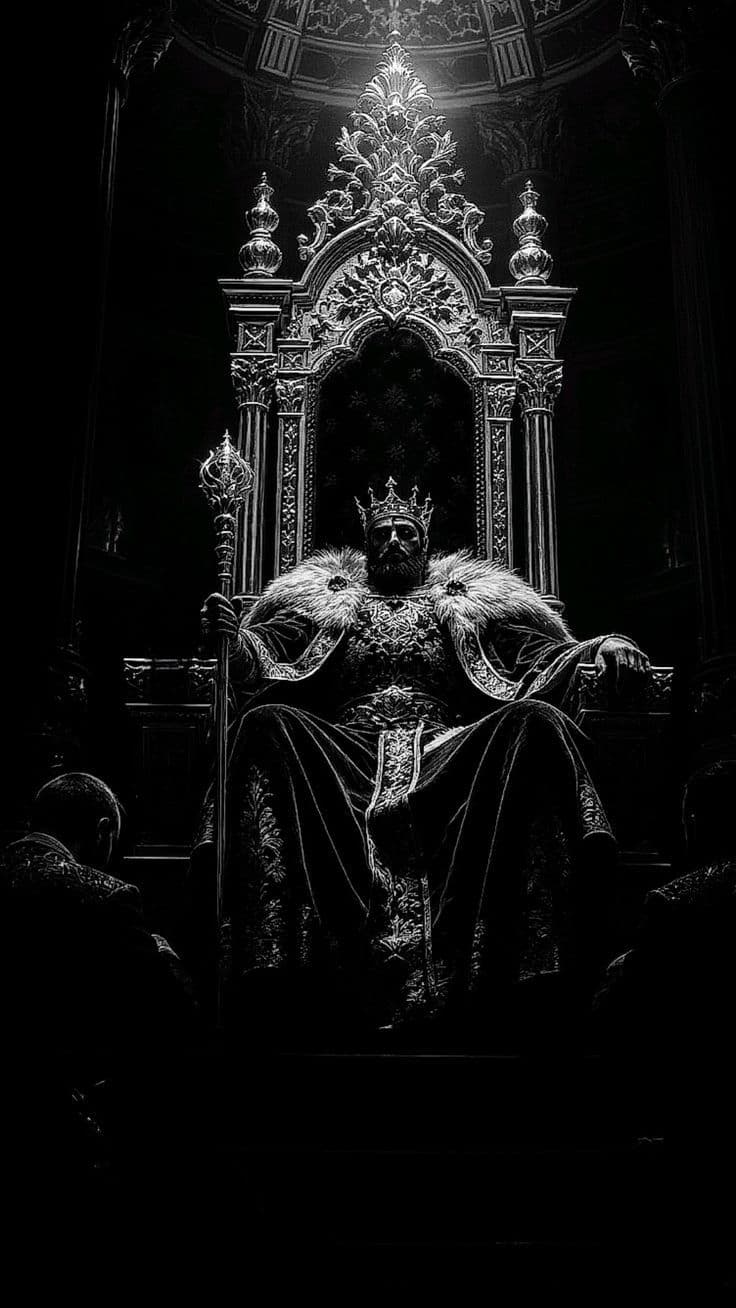
The sleeping king in the city of fog
Beneath the sun-kissed hills and winding streets of Fog City, in the heart of the ancient district, lies a secret older than the stone walls of the city itself. Mysterious caves and hidden chambers, long forgotten by ordinary citizens, hide a sleeping king and his loyal warriors. This is the legend of King Sakhr, the sleeping ruler, a tale whispered by generations, and told by those who still wander the city streets at dusk with awe and caution. It is said that King Sakhr is a monarch from the era of great kings and of wide fame. He lies on a golden funerary bed, his hands folded over a shield engraved with sacred symbols. Around him lie his warriors, arranged as if in eternal vigilance, their spears and shields forming a silent circle. The story goes that the king does not sleep as mortals sleep, but rather in suspended tranquility, protected by spells woven throughout the ages. Only when the country faces its most dangerous threat will he and his warriors rise from stone and shadow to defend the land. Long ago, the City of Mist was a city of power and influence. The king ruled justly and led the armies with courage and wisdom. He united disparate peoples under one banner. However, as the years passed, enemies gathered on the border, and whispers of destruction reached the king's ears. A prophecy has emerged from the wise: the kingdom will endure if the king and his warriors, in its darkest hour, can rise again to defend it. As time passed, and the king saw the inevitability of retreat, he chose to put himself into an enchanted sleep. He entrusted his loyal leaders to remain ever vigilant when they rested, bound by magic to rise only when the world needed them most. Sealed within hidden caverns beneath the Mist City, they were protected from decay and oblivion, waiting through centuries of both peace and danger. Legends tell of strange phenomena near the areas above the King's Hidden Chambers. On certain nights, travelers report faint flashes of golden light dancing along the cliffs and rocky outcroppings that guard the city. The echoes of distant centuries and the clash of swords drift faintly on the wind, even though there is no army marching above the ground. Locals tell the children to be careful not to wander too far near the ancient ruins after sunset, because King Sakhr and his warriors are restless even in their enchanted sleep, sensing the turmoil in the world above. Stories tell of shepherds in the hills who once stumbled upon a cave glowing with a dull, unearthly light. Inside, they glimpsed armored figures, their faces calm but alert, and the king lying in stately stillness. The shepherds retreated in fear and astonishment, carrying with them tales of silent surveillance and a fate intertwined with the country's destiny. over the centuries, The Mist City itself grew, and the roads and neighborhoods were covered by hidden passages. However, the legend persisted, remaining in whispers and manuscripts. During times of foreign invasion, people said the king moved, and sometimes unexplained phenomena seemed to confirm this. Lamps swayed in the empty rooms; Faint footsteps echo through the deserted streets; The shadows seemed to gather in patterns reminiscent of soldiers' formations. These subtle signs reminded people that the protector of the kingdom was waiting below, patient and eternal. The story of King Sakhr functions not only as an account of prophecy but as a meditation on vigilance, duty, and the cycles of history. The story teaches that even in apparent calm, the guard continues, and that hope continues as long as the memory continues to remember the actions of the past. Some accounts of the legend expand on the king's virtues and fears. It is said that he dreamed of his people, imagining the fields of the misty city, the river shining in the sunlight, the bustling markets, and the harmony of temples standing side by side. However, in his slumber, he anticipated threats: invasion, famine, and internal strife. Magic ensured that he would only awaken at the precise moment when the country's survival depended on his wisdom and courage. Generations of villagers, scholars, and wanderers have claimed to encounter the king's presence, though none have entered the deep chambers. They tell visions: golden banners swirling in the moonlight, the soft gleam of armor beneath the rocks, and the distant sound of a horn echoing as if summoning people to wakefulness. These are interpreted as subtle warnings, reminders that hidden defenders maintain a connection with the world of mortality. In the modern era, The legend lives on as the secret heartbeat of the City of Mist. Guided tours of the city, while mostly focusing on the visual architecture and history, sometimes tell tales of the Hidden King. Writers and poets draw inspiration from the idea that beneath their feet lies a noble protector in eternal patience. The story invites reflection on the passage of time, the persistence of cultural memory, and the moral imperative to protect what has been entrusted to us. Although King Sakhr remains invisible, his story resonates with every generation. It embodies the hope that even in times of decline or threat, guardedness, courage, and destiny persist. The echoes of his sleeping court remind everyone that history is alive, and that the actions of the past contribute to protecting the future. Those who walk the streets of the Fog City in quiet contemplation may still hear, in the rustle of the leaves or the whisper of the river, the distant warning of a king awaiting his hour.