
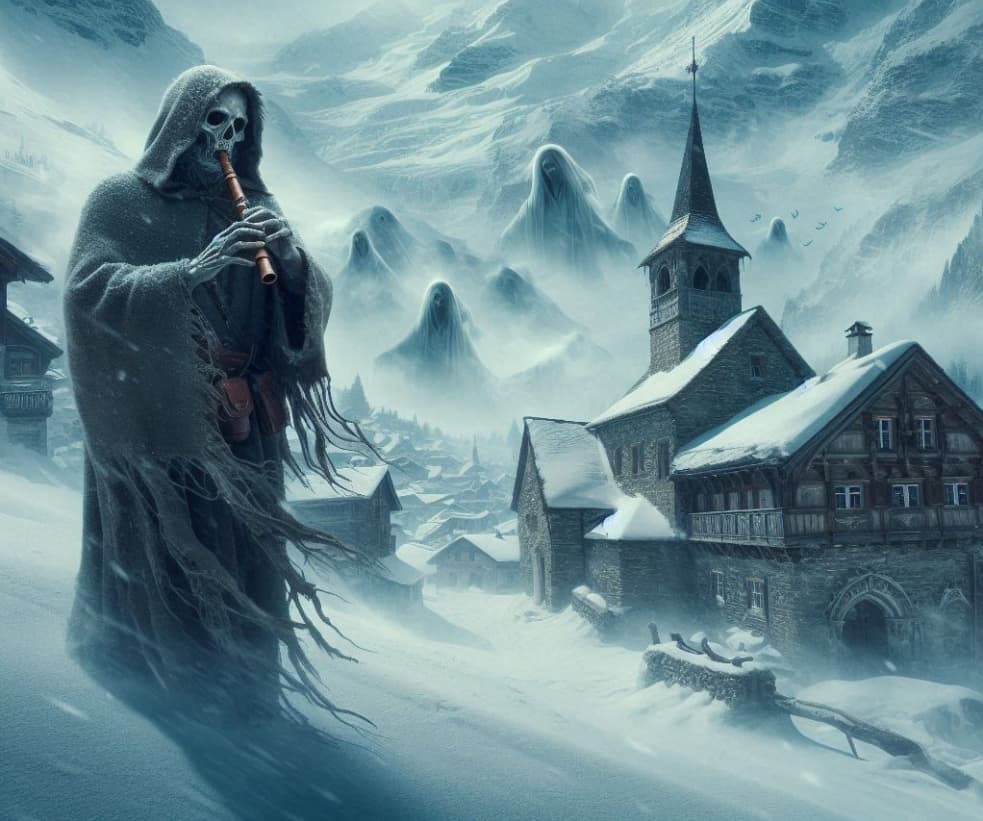
The cursed oboe player from the Alps
Long ago, when shepherds still roamed the high corridors with their ringing goat bells, and when the snow fell like thick curtains, there lived in the village of Andermatt a flute player named Lucas. Lucas was playing the horn of the Alps to live, but he was playing his wooden flute to live. His music was able to summon lambs from over the cliffs, and make the falcons bend in the middle of their flight. People claimed that his tunes could change the weather. or attracting luminous butterflies from among the glaciers, or relieving the pain of childbirth. But Lucas remained humble, until a melody came to him in a dream. He called it “The Last Tune.” He should never have played it.
For many years, Lucas was loved. But praise, just like melting snow, creeps into the cracks and destroys them. One summer, a boy named Emil came into town with a whistle from the bone and fingers as thin as birds' wings. His playing was simple, but sweet as wild honey. People left Lucas to listen to the boy's simple hymns, even the goats tilted their ears to him. The bitterness ignited in Lucas's heart. He honed his flute like daggers, practicing until dawn. But in his jealousy, he forgot that music was once his prayer, not his strength. Thus, when the “last melody” returned to him in a dream-frighteninglycomplete, and etched like frost upon his soul-he immediatelywoke up and played it. The villagers froze in their places, then the earth trembled. The song of the avalanche
From above the rocky peaks, a tremendous roar began. It sounded like a drumbeat, or maybe a hundred voices humming together. Then came the collapse; snow, ice, and stones swept away everything in the way of the mountain; he swallowed goats, fences, and half the church. The villagers shouted, but the melody continued, reverberating through the white madness. Lucas tried to stop, but he couldn't; his fingers were moving like they were possessed. His eyes bleached, and his breath was cut off. The snow stopped only when the last note faded. When they dug up the snow to get it out, Lucas was unharmed, but the village wasn't what it used to be.
From that day, Lucas was exiled. He wandered from valley to valley, playing for sheep, and for the wind, and playing for no one at all. He tried to forget the melody, but the melody was following him; he hesitated to whistle, pulsating in his dreams, even the birds were silent when he began to play. Some say he got lost in the high Alps and disappeared. Others say that he has become a ghost who seduces travelers and pulls them to the cliffs with his funerary melody. But there is one anecdote left:
Many years later, Emil- now a wise and kind man - climbed thesame peak as Lucas for the last time. There, he found Lucas's wooden flute stuck in the ice, still warm to the touch. He grabbed him, but he didn't play. Instead, he buried him under a pile of stones. He said a prayer for that cursed man, then came down from the mountain without music. That night, in the village of Andermatt, villagers reported hearing a soft, grateful note of music carried by the wind.