
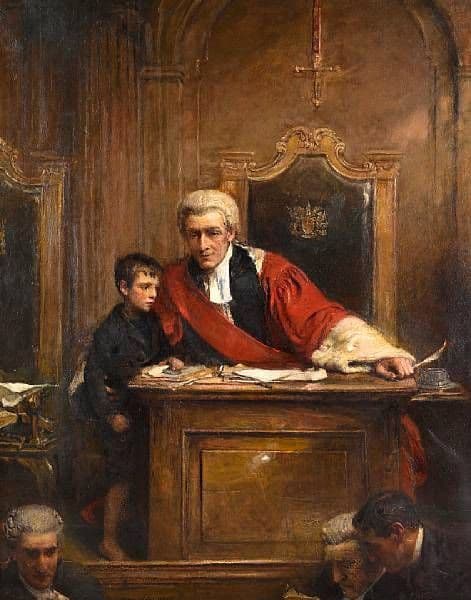
Mansour and the judge
In the bustling City of Lights, where the sun poured its gold over the tiled roofs and narrow stone streets, lived a young man named Mansour. Everyone knew him; Some described him as foolish, while others saw him as simple and harmless. The children followed him into the market, laughing at his literal answers and strange logic, while the adults shook their heads and muttered that he would never get anywhere. However, Mansour had an amazing gift: he took words exactly as they were spoken. He did not color it to suit the circumstances, He did not assume what others meant and failed to say. In a world where people relied on insinuations and customs, this disposition made him seem ridiculous, but it also made him dangerous in ways that few realized. One summer afternoon, an argument broke out that brought Mansour before the city judge. A wealthy merchant claimed that Mansur had abused him; According to the merchant, Mansour was assigned a simple and clear task, but he carried it out in a foolish way that caused damage. Because of his anger and his desire to make an example to others, the merchant demanded justice. The case was brought before the judge, a stern man whose authority was based not only on his position, but on people's fear of displeasing him. His clothes were always spotless, his words thoughtful, and his gaze sharp. He believed strongly in order and respect. When Mansour entered the courtroom, people gathered around him, expecting embarrassment or perhaps punishment, and certainly a lot of confusion. The judge cleared his throat and said solemnly: “Mansour, you are accused of misconduct. What do you have to say?” Mansour looked around the room calmly and replied: “Your Excellency, I did what I was told.” The merchant stepped forward angrily: “He is mocking the court! I have given him clear instructions.” Mansour turned to the merchant: “You told me to behave properly, so I behaved appropriately.” A low laugh passed through the room before the judge silenced it with a sharp gesture and asked: “What do you mean by ‘proper’?” Mansour answered honestly: “I acted the way I have always seen important men act. I followed your example.” A murmur spread among those present, and the judge’s expression hardened and he said: “Explain yourself.” Mansour spoke without hesitation: “When important men speak, they speak loudly for everyone to hear. When they are dissatisfied, they show it clearly. And when they think they are right, they do not listen to others. I watched carefully, so when I was in the merchant’s house, I acted as I saw the authority act.” The merchant protested: “This is nonsense!” Mansour blinked his eyes and said: “Is it so?” The judge leaned forward: “Are you accusing this court of injustice?” Mansour quickly shook his head: “No, Your Honor. I’m just saying that I learn by observing.” If I'm wrong, maybe I'm watching wrong." The room was silent, and the judge felt a change in the atmosphere. Mansour's tone was innocent, but his words struck something deeper. People were no longer laughing, but were listening intently. The merchant ran out of patience and said: "He's pretending to be simple! He twists words!" Mansour replied gently: "I don't twist words. I hold them straight, and that's why they sometimes look crooked." A wave of uncomfortable laughter passed through the crowd. The judge tapped his cane on the stone floor: "Mansour, Do you realize the danger of standing before this court?” Mansour said: “Yes, and that is why I am cautious.” The judge repeated: “Cautious?” Mansour replied: “Yes, I am only saying what I see. If I speak foolishly, it is because I have seen foolishness. And if I speak wisely, it is because I saw wisdom.” The merchant’s face reddened with anger: “He is insulting authority!” Mansour raised his hands in protest: “No, sir, I respect authority very much, and that is why I imitate it.” People could not suppress their laughter now, and some adults even covered their mouths to hide their smiles. The judge felt his dignity slip, but beneath his discomfort something uncomfortable stirred: “Recognition.” Mansour's words, ridiculous on the surface, reflected customs that the judge never questioned. How many times did he speak without listening? How many times has he relied on his position rather than clarity? Mansour continued in a calm voice: “If those in power speak fairly and patiently, those under them will do the same. If they scream, others will scream. If they belittle, others will belittle. I am just a student of what I see.” The courtroom was silent. People looked at the judge, Their eyes were not on Mansour now, but on him. At that moment, the room was off balance; Authority that had never been in doubt was brought under scrutiny, not through rebellion or accusation, but through simple imitation. The judge straightened his seat and said slowly: “This court should be guided by justice, not pride. If there is misconduct, it will be dealt with fairly.” Then he turned to the merchant and said: “Your complaint is not based only on Mansour’s actions, but on assumptions. If the instructions are not clear, Misunderstandings follow. If authority acts harshly, cruelty spreads.” The merchant opened his mouth to object but fell silent under the judge’s steady gaze. The judge continued: “As for Mansour, his manner may seem foolish, but his words reveal a lesson. Let all those present remember that authority must be worthy of imitation.” A hum of approval rose from those present. Mansour bowed deeply and said: “Thank you, Your Excellency. I will continue to watch carefully.” A flash of amusement mixed with hesitation passed over the judge's face, and the case was closed. Justice was restored, not by punishment, but by contemplation. As Mansour returned to the bright sunlight of the City of Lights, children ran beside him, laughing and asking him what happened. He smiled in his usual way and shrugged, "I just told the truth." And in the city's alleys, where pride and laughter go hand in hand, the story of Mansour and the judge has been told for generations, not as a tale of rebellion, but as a reminder that wisdom sometimes wears the mask of foolishness, and that power, when faced with honest absurdity, may rediscover its best.